
List.buy.sell on construction one stop shop

24 Apr 2019 Reviews
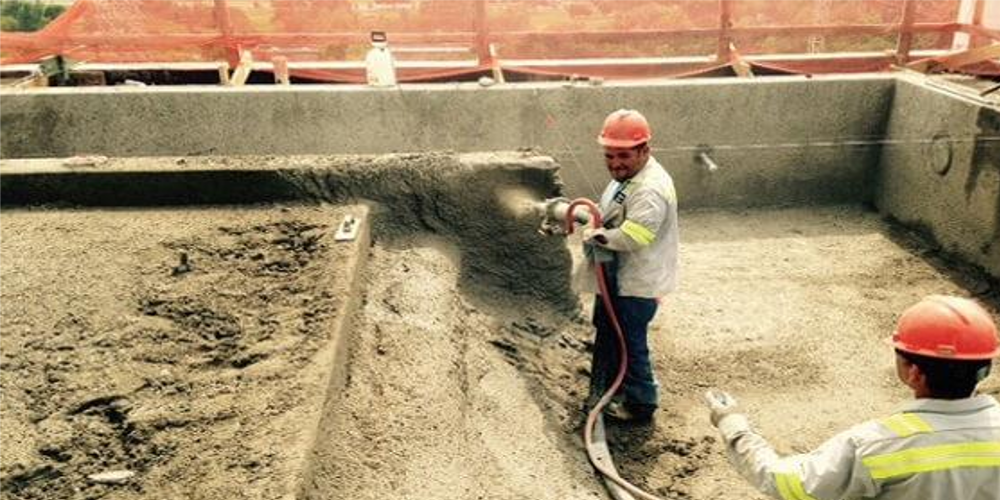
There are two common types of concrete that construction companies use — ready mix concrete and site mix concrete. Both types of concrete have their own set of specifications, advantages and disadvantages.
Site mix concrete is volumetric concrete that is mixed at the construction site. This type of concrete is made by mixing cement, sand, and water in a ratio. It
involves a number of formulas and steps that require some amount of time to mix. Users have to be extremely meticulous with the proportion of all ingredients for not compromising the quality of the concrete

Ready-mix concrete is concrete whose constituents are weight batched and manufactured in a batch plant, according to a set engineered mix design. It is
normally delivered in two ways. First is the barrel truck or in–transit mixers. This type of truck delivers concrete in a plastic state to the site.
Although the terms cement and concrete often are used interchangeably, cement is actually an ingredient of concrete. Concrete is basically a mixture of aggregates and paste. The aggregates are sand and gravel or crushed stone; the paste is water and portland cement (Portland cement is the most common
type of cement in general use around the world as a basic ingredient of concrete, mortar, stucco, and non-specialty grout). Concrete gets stronger as it gets older.
Batch plants combine a precise amount of gravel, sand, water and cement together by weight, allowing specialty concrete mixtures to be developed and
implemented on construction sites. If you are forked between ready-mix concrete and site mix concrete for your construction project, here are the key differences between the two;
Application
RMC is recommended for constructing high-rise structures, especially when there are logistical barriers. Site mix concrete is recommended for low-rise
structures and if you have sufficient storage space
Wastage
End users don’t lose material with RMC, but there’s certainly some loss of material during storage with site mix concrete
Quality
RMC has a consistent quality because it is produced under controlled condition. On the other hand, site mix concrete has low consistency in quality. It’s only through continuous supervision that consistency can be achieved
| Ready Mix Concrete | Site Mixed Concrete | ||
| Pros | Cons | Pros | Cons |
| Better Quality Concrete is produced in lesser time. |
There are restrictions on the minimum order | Quality of the concrete can be enhanced with stricter supervision. | It demands proper logistics in terms of storage. |
| Elimination of storage space for basic materials at site. |
Completion of concrete-buildingprojects relies on external service providers. | There is little or no dependence on external agencies for concrete-building projects. | It requires continuous supervision and huge manpower to make site mix concrete. |
| Noise and dust pollution at site is reduced. | It is 20% costlier than site mix concrete. | Even a small batch of site mix concrete can be produced. | Site mix concrete takes more time to settle because of possible inconsistencies in quality. |
| Labor associated with production of concrete is eliminated. | Users can optimize the design and save money with site mix concrete. | It requires the assistance of testing laboratories to test results. | |
After comparison of the two concrete types, Ready mix concrete is considered superior to site mixed concrete. A little more money out of your pocket
guarantees you durable and better concrete. Ready-mixed concrete is sold by the volume, so it’s essential to know the area you’re filling. The price of concrete
depends on many factors, including where you’re located and the type you’ve ordered and the company you are ordering from.
Where to get Ready Mix Concrete
There are multiple suppliers of RMC locally including;
- Bamburi Cement- Mombasa Road
- Blue Triangle Cement- Namanga, Athi River
- Rhombus Concrete Limited- Kiambu road
- Warren Enterprises- Kasarani, Mwiki Road